
This report analyzes global real estate performance from 2020 to 2025, focusing on price appreciation, rental market trends, and buying & selling activity across key regions.
1. Global Real Estate Price Appreciation
General Trends
Across major global cities, property prices rose sharply in the post-pandemic period as demand rebounded. In many markets, home prices outpaced both rent growth and income levels, with global research indicating prices were nearly 60% higher than a decade ago by 2025.
Europe — Milan
Milan emerged as one of Europe’s strongest luxury markets, with prime residential prices climbing approximately 38% between 2020 and 2025.
Asia Pacific
Investor sentiment strengthened across Asia Pacific, with real estate investment intentions reaching their highest level in four years by 2026 — driven by office, living, and hospitality sectors.
China
China remained an outlier, experiencing a prolonged property market correction marked by price declines and slower growth due to regulatory tightening and structural economic shifts.
2. United States Real Estate Market
Price Growth Moderation
U.S. home prices surged early in the pandemic, rising roughly 40% between mid-2020 and mid-2022. Growth slowed significantly through 2025, with national averages showing near-flat annual changes.
Home Sales
Existing home sales remained near historic lows in 2025, comparable to levels last seen in the mid-1990s. Transaction volumes lagged far behind the pandemic boom years.
Market Behavior
By 2025, nearly 60% of U.S. buyers purchased below asking price, highlighting weaker demand and pricing pressure in many metropolitan areas.
3. Rental Market Trends
Rental Cost Inflation
Rental markets globally experienced strong inflation during and after the pandemic. Rising rents became a major contributor to overall cost-of-living pressures.
Regional Variations
While U.S. national rents grew modestly (~2.1% YoY by late-2025), individual cities showed dramatically different outcomes — from 30–50% rent increases to cooling demand in others.
Shift in Demand
In select markets such as the UK, rental demand softened as improved affordability pushed some households back into homeownership.
4. Buying & Selling Trends
Elevated interest rates and affordability constraints reduced buyer activity in many mature markets, particularly the U.S. However, investor-driven and international demand remained strong in select global hubs such as the UAE and Milan.
5. UAE & Dubai Market Snapshot
Between 2020 and 2023, the UAE real estate sector’s GDP contribution rose from approximately USD 21.0B to USD 25.9B, with strong momentum continuing through 2025.
Dubai recorded historic transaction volumes in 2025, driven primarily by off-plan sales, international buyers, and attractive payment structures. Rental yields remained compelling, averaging 7–8% in several districts.
Looking ahead, increased supply is expected to gradually balance prices and rental growth into late-2025 and 2026.
Market Trend Visualization
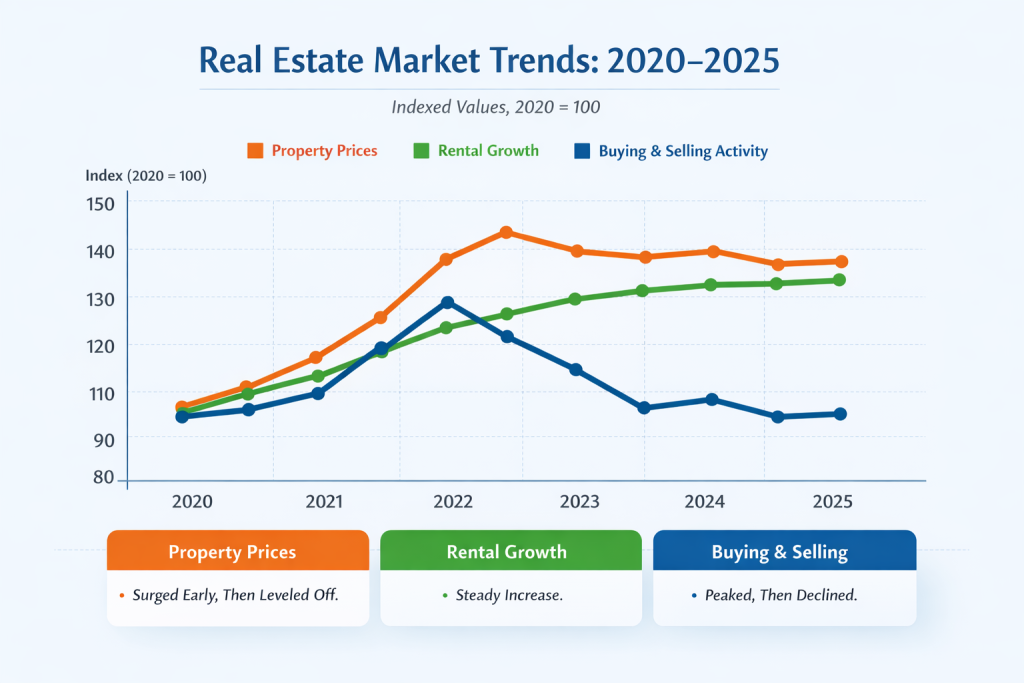
Indexed trend comparison (2020 = 100): Price Appreciation, Rental Growth, Buying & Selling Activity
📊 Summary: Key Themes (2020–2025)
| Metric | 2020–2022 | 2023–2025 |
|---|---|---|
| Price Appreciation | Rapid post-pandemic growth | Moderation and stabilization |
| Rental Costs | Strong global increases | Continued but slowing growth |
| Sales Activity | High recovery-phase volumes | Flattened or historically low |
| Investor Appetite | Selective global hotspots | Luxury & prime assets favored |
Final Insight
From 2020 to 2025, global real estate transitioned from rapid post-pandemic expansion to a phase of normalization. Prices surged first, rentals followed steadily, and transaction volumes cooled — creating a more selective, yield-focused investment landscape.
Leave a Reply